


May 7, 2026 9:09 PM
Updated May 8, 2026 3:48 AM
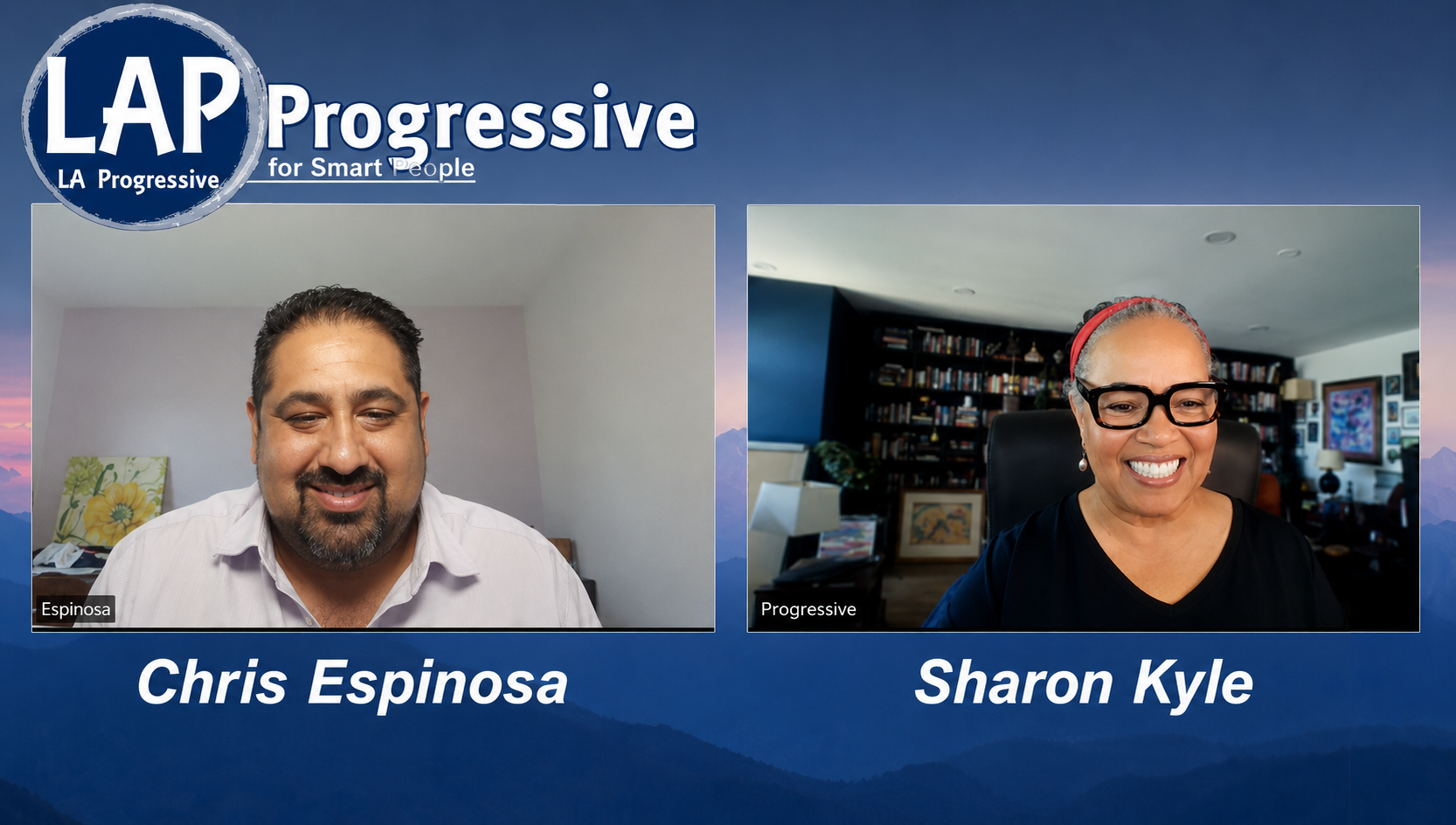
An LA Progressive conversation on environmental justice, democracy, and corporate power
The LA Progressive doesn’t have the capacity to interview every candidate running for office. We’re a small operation, and choices have to be made. But every so often, someone comes along who compels attention.
That’s exactly what happened when a longtime supporter reached out and said: You need to talk to Chris Espinosa.
After taking a closer look, we agreed.
Espinosa is running for Congress in California’s 26th District, the seat being vacated by Julia Brownley. What stood out immediately wasn’t just his policy positions—but the throughline of his work: decades of advocacy rooted in social justice, environmental protection, and community engagement.
Related stories
So we sat down for a conversation.
From Santa Paula to Capitol Hill
Espinosa grew up in Santa Paula, in Ventura County—the far western edge of the district he now hopes to represent. His entry into political life came early.
“The first campaign I worked on, I was 11 years old.”
That early start evolved into a career focused on affordable housing, civil rights, environmental protection, and immigration reform. His work eventually took him to Washington, D.C., where he served in a senior role on the House Committee on Natural Resources under Raúl Grijalva.
That experience shaped how he understands both power—and its failures.
Flint: A Case Study in Policy Failure and Representation Breakdown
One of the most revealing moments in Espinosa’s career came during the Flint water crisis, where he worked directly with affected communities.
What he saw, he says, was not just a single failure—but two:
- A failure of policy
- A failure of representation
The policy failure wasn’t just about poor decisions—it was structural.
“There was no requirement to notify residents that they were at risk.”
When local officials switched water sources to cut costs, the chemistry of the new supply corroded aging pipes, leaching lead into drinking water. The result: widespread poisoning that will affect generations.
But just as troubling was the second failure—what Espinosa calls representational neglect.
Communities most affected were not meaningfully included in decisions that directly impacted their health.
The Bigger Pattern: Corporate Power vs. Community Voice
Espinosa’s experience in Flint wasn’t an anomaly. It reflects a broader pattern he has seen across the country.
From mountaintop removal mining in Appalachia to the fight against the Dakota Access Pipeline protests, he describes a recurring dynamic:
- Corporations with lobbying power dominate decision-making
- Communities most affected struggle to be heard
“Those are David-and-Goliath fights… and the communities are the ones who need representation the most.”
The lesson is clear: policy doesn’t fail randomly. It fails in predictable ways when power is concentrated and participation is limited.
Rethinking How Policy Gets Made
Espinosa points to his work with Grijalva on the Environmental Justice for All Act as a model for doing things differently.
Instead of drafting legislation behind closed doors and presenting it to the public, the process actively involved impacted communities at every stage.
“We need to create mechanisms for communities to speak for themselves.”
This approach flips the traditional model:
- Old model: Experts design policy → public is asked to accept it
- Participatory model: Communities help shape policy → legislators translate lived experience into law
It’s slower, but far more effective—and more democratic.
The Quiet Erosion of Public Input
One of the more alarming points raised in the conversation is the steady weakening of public participation requirements.
From environmental reviews under NEPA to federal rulemaking comment periods, mechanisms designed to include public input are increasingly under threat.
Even when participation is technically allowed, it’s often structured in ways that limit real engagement—short notice, inaccessible meeting times, or procedural hurdles.
In other words, participation exists on paper—but not in practice.
Immigration: Toward a Humane System
On immigration, Espinosa argues that the U.S. system is neither humane nor functional.
He outlines several core problems:
- Complex, inaccessible processes
- Arbitrary backlogs
- Discriminatory country caps
- High financial barriers
“It’s not as simple as signing up and getting in line. The system is incredibly difficult to navigate.”
His framework for reform centers on:
- Keeping families together
- Creating a system that is navigable and equitable
- Aligning policy with the country’s identity as a nation of immigrants
He also takes a firm stance on enforcement, calling for the abolition of ICE, which he argues has evolved into something far beyond its original mandate.
What People Get Wrong About Congress
Perhaps the most practical part of the conversation came when Espinosa was asked what Americans misunderstand about how Congress works.
His answer was blunt:
“Decisions are made by those who show up.”
And too often, the people who show up are corporate lobbyists.
Ordinary people, he says, underestimate their potential influence—not because the system is perfectly responsive, but because participation still matters.
He urges people to:
- Contact not just their representatives, but committee chairs
- Submit testimony and letters
- Engage in the policymaking process beyond voting
“Voting is the bare minimum.”
A Campaign Built on Community Support
Unlike many candidates, Espinosa says he refuses to take money from fossil fuel interests or corporate PACs.
That decision shapes his campaign—and its challenges.
“That means we need community support. Every dollar helps.”
For those interested in learning more or contributing, his campaign can be found at:
The Bottom Line
Espinosa’s candidacy sits squarely in a tradition the LA Progressive has long supported—leaders shaped not by political ambition alone, but by sustained engagement in community struggles.
Whether voters ultimately support him or not, the issues raised in this conversation cut deeper than any single campaign:
- Who shapes public policy—and who doesn’t
- How systems fail—and why
- What democracy requires beyond voting
Because if there’s one takeaway, it’s this:
Democracy isn’t just something you participate in every few years.
It’s something that responds—imperfectly, unevenly—to those who show up.
Click here for more information on Chris Espinosa
Comments

Powered by RoundtableAn AI/DeFi-powered Enterprise Media Operating System. Learn more at Roundtable.io.© Roundtable 2026. By using this site you agree to the Terms of Use and Privacy Policy