


Aug 19, 2026 7:24 PM
Updated Aug 19, 2026 7:29 PM
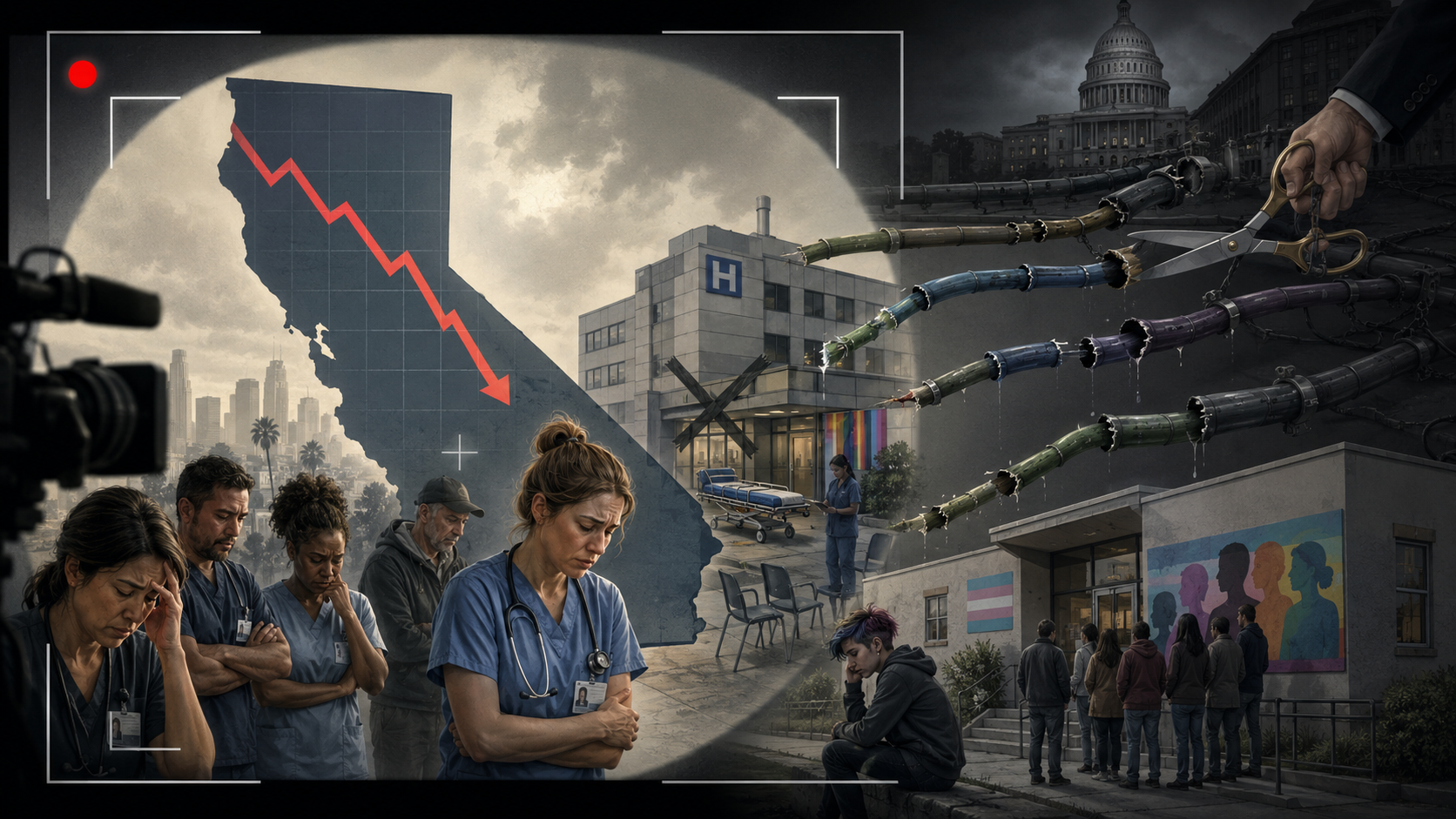
Healthcare layoffs, shrinking LGBTQ+ services, and local budget crises are being treated as isolated failures—but upstream federal funding decisions are driving much of the damage.
We're entering the final quarter of the second year of this administration—and the consequences of its funding priorities are no longer abstract. Early on, the administration moved to shut down or scale back funding streams for programs and organizations it opposed or deprioritized.
Some communities felt the pain immediately. But this is the moment when the downstream effects become unavoidable: staffing cuts, reduced services, longer waitlists, and organizations forced to make choices they never wanted to make.
Most of the media is covering the symptoms while ignoring the source.The Frame is the storyline we're handed—who gets blamed, who gets excused, and what "context" gets quietly edited out.
When the frame is wrong (or incomplete), the public can't make an informed judgment about leadership, priorities, or accountability.
Related stories
When the frame turns into victim-blaming
A few months ago, Fareed Zakaria had a major opportunity on CNN's GPS to connect the dots between California's current unemployment numbers and upstream funding decisions. Instead, the segment leaned into a familiar narrative: California is a mess; leaders in Sacramento are failing; the state is paying the price. But even within his own charts, the biggest clue was sitting in plain sight: healthcare job losses are a major driver of California's unemployment surge.
If you talk about unemployment—then treat the funding cuts that triggered the largest sector losses as a footnote—you're not explaining reality. You're trying to shape it.
Local stories, same missing context.
But it's not just the big news outlets that are missing the frame. We're seeing a similar gap in local reporting.The Long Beach Post has covered the LGBTQ Center Long Beach and the very real fear around reduced services for the trans community. Those concerns are legitimate and urgent. But readers deserve the upstream context: what funding lines changed, who changed them, and why? When coverage focuses on local leadership dilemmas without naming the budget decisions that created the crisis, the audience is left with the impression that local organizations simply mismanaged their way into scarcity. That's not accountability. That's an incomplete story. The numbers underneath (the part the frame keeps hiding). Here's what the data says about the structural drivers—especially in healthcare:
- 109,000 to 217,000 jobs: The UC Berkeley Labor Center estimates that reductions of $10B–$20B in annual federal Medi-Cal funding could translate into 109,000–217,000 jobs lost across California.
- 67% in healthcare: About 67% of those losses occur directly in healthcare settings (hospitals, community health centers, nursing homes, outpatient clinics). The rest ripples into local supplier and service economies.
- $18.5B–$37.0B economic output loss: The projected reduction in state economic output is $18.5B–$37.0B, alongside up to $1.7B in lost state and local tax revenue.
And when we zoom into LGBTQ+ and trans health services, the pattern is just as clear:
- $1.6M CDC grant terminated: The termination of a $1.6M CDC grant designated for transgender health, STI/HIV testing, and service navigation at major LA-area clinics has had a trickle down impact that moves donors into more "stable" services.
- $17M LGBTQ+ Health Equity Fund ended early: The LA LGBT Center has pointed to the early termination of a $17M LGBTQ+ Health Equity Fund—cutting off infrastructure and grant support for providers serving queer and trans communities.
This is the double-whammy communities feel: upstream federal decisions, downstream state budget moves, and local organizations left to absorb the impact—while the public is told a story that blames the people closest to the damage.Two questions every "service cuts" story should answerIf journalists want to serve the public (and if readers want to demand better), every story about reduced services should answer:
- What specific grant or program funded this service?
- Who altered or eliminated that funding line—and when?
Because if we can't answer those questions, we're not evaluating leadership. We're evaluating optics. And optics are cheap. Community health is not.
Comments

Powered by RoundtableAn AI/DeFi-powered Enterprise Media Operating System. Learn more at Roundtable.io.© Roundtable 2026. By using this site you agree to the Terms of Use and Privacy Policy