


Aug 1, 2020 9:00 PM
Updated Feb 10, 2022 10:26 PM
Marilyn Kroplick MD:The pandemic makes one thing clear: We must change our relationship with wildlife or suffer the consequences.
Coronavirus Shines Light on Zoos as Danger Zones for Deadly Disease Transmission Between Humans and Animals
The term “zoonotic disease” wasn’t a hot topic of conversation before the novel coronavirus started spreading across the globe and upending lives. Now, people are discovering how devastating viruses that transfer from animals to humans can be. But the threat can go both ways—animals can also get sick from humans. There is no better time to reconsider the repercussions of keeping animals captive at zoos, for the sake of everyone’s health.
COVID-19, the illness that’s caused by the novel coronavirus, is the result of human contact with animals, though the exact source remains a subject of debate. The risk of such zoonotic disease transmission drastically increases in any setting where wild animals are confined in close proximity to humans, including public display facilities like zoos. Unfortunately, the risks posed by zoonotic transmission go beyond COVID-19. A recent study found that more than 40 percent of zoo animals in Spain were infected with a parasite that can be passed to humans and causes a disease known as toxoplasmosis, which can lead to damage to the brain, eyes and other organs in human beings. Across the U.S., another dangerous zoonotic disease has long been lurking in our midst at zoos: tuberculosis (TB).
The pandemic makes one thing clear: We must change our relationship with wildlife or suffer the consequences.
TB is a deadly, highly infectious disease that has long existed in captive populations of African and Asian elephants in zoos and circuses across the U.S. According to the World Health Organization, TB is one of the top ten causes of death worldwide, killing millions of people each year. Although TB rates have been on the decline for decades in the U.S., captive elephants represent a persistent reservoir of the virus. Incredibly, “licensees and registrants who own elephants” are not required to test elephants for the virus. Even if they were, these tests, known as “trunk washes,” are difficult to conduct and can be unreliable. This means that zoos may be bringing the unsuspecting public into contact with infected elephants. Because TB is no longer common in the U.S., children are not vaccinated against it, making them particularly susceptible.
The risk of elephants transmitting TB to humans is generally greater among those who work closely with elephants, though it is thought that TB can spread from elephants to humans through air also. The risk of wider contagion, especially to zoo guests, is therefore a possibility. Many zoo exhibits bring people through indoor barns where elephants spend much of their time, separated only by bars and a few feet of space. Even more intimate encounters, such as rides or feedings that enable people to come into direct physical contact with elephants, are particularly concerning given their amplified transmission opportunities.
Related stories
TB has long been known as a potentially serious issue in U.S. zoos. Many people have been infected over the years, including, as recently as 2019. In 2013, seven staff members were infected at the Oregon Zoo in Portland, following an outbreak among three bull elephants. Elephant infections persisted there into 2019. Also, last year, some staff members tested positive for latent TB at the Point Defiance Zoo & Aquarium in Tacoma, Washington. Both the Bronx Zoo in New York City and the Saint Louis Zoo in Missouri also have had elephants test positive in recent years.
The threat of deadly disease transmission, however, does not only affect humans. In a process called reverse zoonosis, diseases such as influenza A virus, herpes simplex 1, measles and methicillin-resistant Staphylococcus aureus (MRSA) have been documented as passing from humans to animals. Regarding TB, studies have shown that the causative agent that leads to human infection of TB is also present in elephants, suggesting a reverse zoonosis of the disease from humans to elephants. This opens the possibility that humans could actually be the cause of TB infections in captive elephants.
Another incident of reverse zoonosis occurred at the Bronx Zoo recently. In April 2020 the zoo announced that one of its tigers tested positive for COVID-19. While no other cats were tested, the tiger’s sister, along with two other tigers and three African lions, developed symptoms including a dry cough, suggesting they might have also been infected.
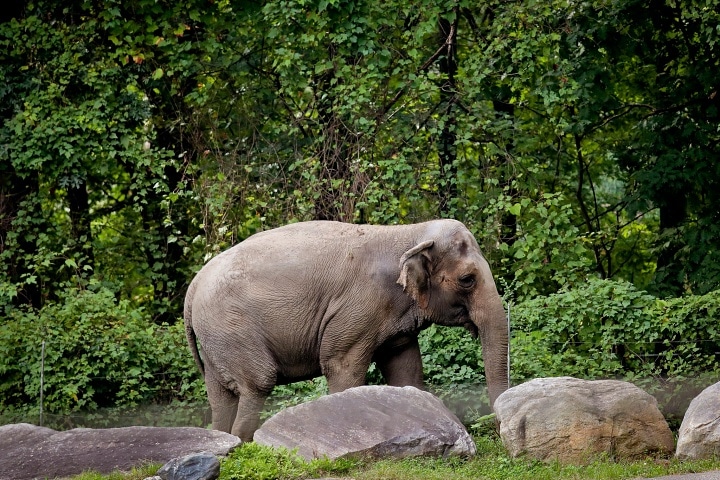
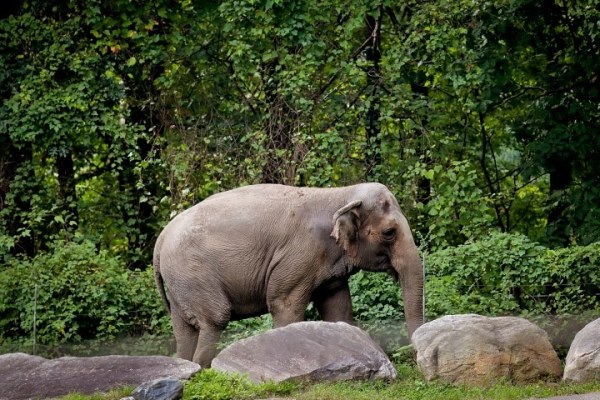
One of the main reasons that zoos can be hotbeds for deadly disease transmission—which threatens elephants, tigers and other captive animals as well as human beings—is that captive animals can suffer from compromised immune systems due to the confines of captivity, rendering them more susceptible to illness. In many facilities, tigers and elephants are often held in cramped enclosures that bear little resemblance to their natural wild habitats. They can be forced to perform or interact with the public on a daily basis or endure living in solitary confinement. The Bronx Zoo, for example, has forced an elephant named Happy to live alone since 2006, a crushing sentence for a highly social species. These types of living conditions can cause a range of physical and psychological ailments, which have been well documented. Captive elephants tend to live shortened lifespans in contrast to those in the wild and suffer from diseases and conditions virtually unseen in the wild. The cumulative effect of these factors renders elephants prone to the TB contagion.
The fact that TB has continued to infect captive elephant populations in the U.S. for decades reveals the extent to which zoos are incapable of providing adequate living conditions to prevent the spread of this disease, despite their best efforts. While zoos and their supporters continue to argue that keeping animals captive is necessary to raise awareness and get people to care about them, seeing animals trapped in unnatural environments that prevent them from thriving doesn’t do anything to teach us about how they live or how they should be recognized, respected and protected in the wild.

We can hope that the world will soon return to some semblance of normalcy, but if this pandemic has taught us anything, it’s that we can’t continue with business as usual when it comes to our relationship with wildlife and the environment—at least not if we want to survive. In the meantime, we can protect captive animals and ourselves by avoiding zoos.
Marilyn Kroplick MD
Independent Media Institute
Marilyn Kroplick MD is president of In Defense of Animals, a board-certified psychiatrist, and award-winning socio-political photographer. Since 2011, Dr. Kroplick has led In Defense of Animals’ powerful campaigns to end the dog meat trade, advocate for elephants, strengthen animal cruelty laws, and save animals in need around the world. Her groundbreaking program to mentor and support animal activists marries support for humans and animals alike. Her passion for animal rights was ignited in 2002 after purchasing a puppy from a pet store who became terribly sick. Dr. Kroplick’s fight for justice led her to discover the system of abuse that brings puppies to pet stores, and successfully expose and shut down the offending pet store. Dr. Kroplick is using her extensive expertise to build a supportive and inclusive social change movement to achieve animal liberation through sustainable activism.
This article was produced by Earth | Food | Life, a project of the Independent Media Institute.
Comments

Powered by RoundtableAn AI/DeFi-powered Enterprise Media Operating System. Learn more at Roundtable.io.© Roundtable 2026. By using this site you agree to the Terms of Use and Privacy Policy