
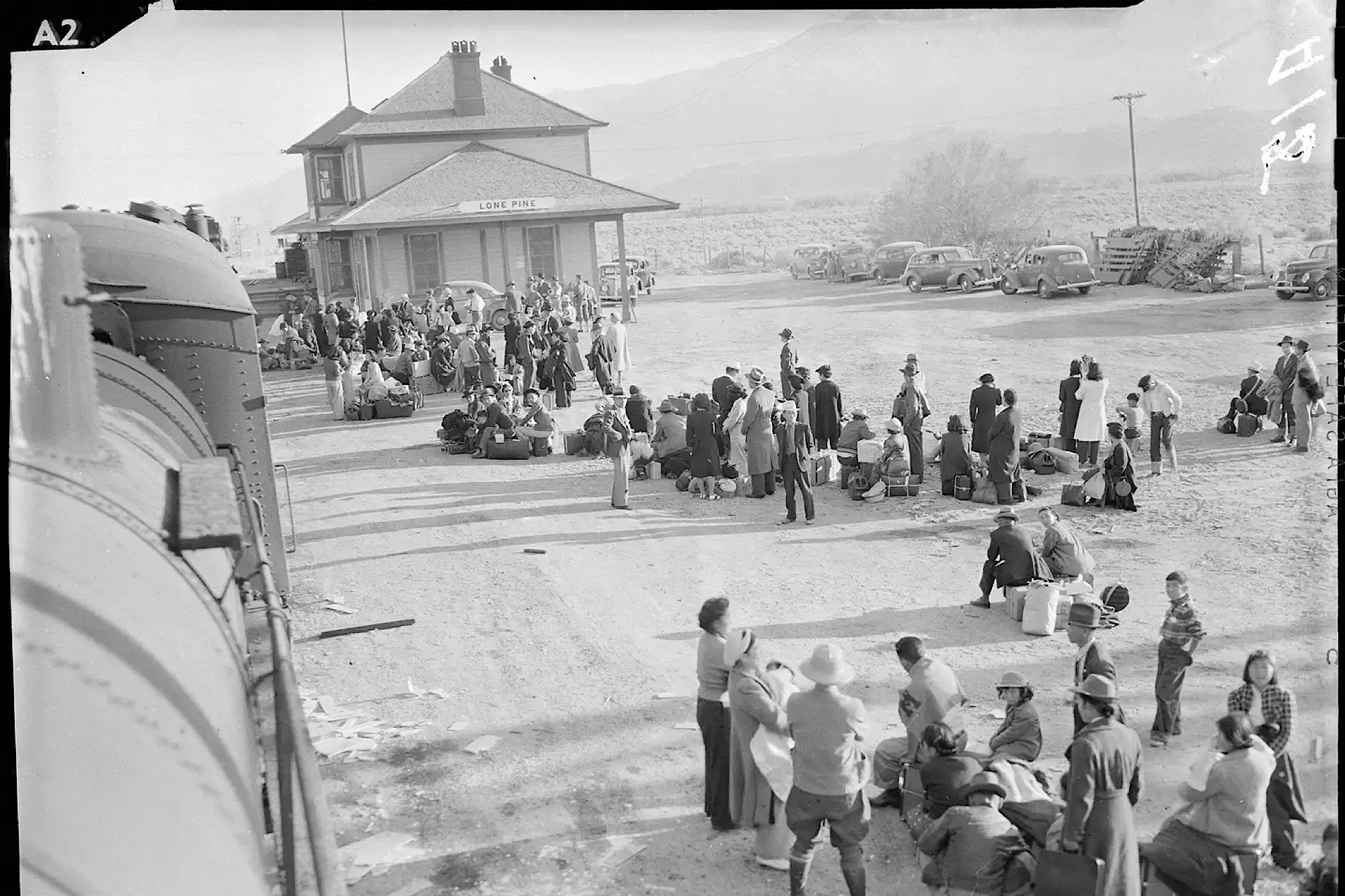
Photo by Clem Albers.


People of Japanese ancestry wait to board buses that will take them to the prison camp at Manzanar, Calif., 1942. People of Japanese ancestry wait to board buses that will take them to the prison camp at Manzanar, Calif., 1942
Jun 27, 2025 12:39 AM
Updated Jun 27, 2025 1:13 PM
The executive order “Restoring Truth and Sanity to American History” instructs park service superintendents to identify and flag public-facing content disparaging U.S. history.
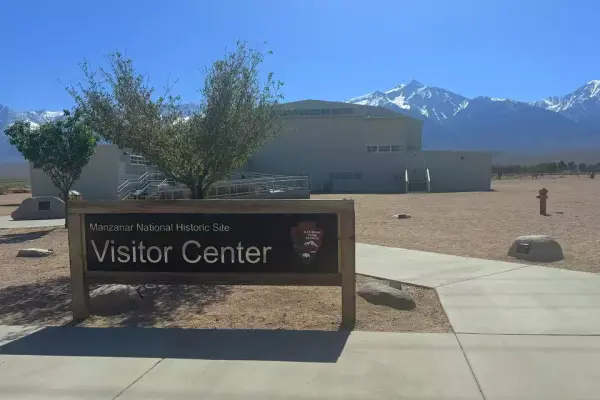
On the orders of the Donald Trump administration, National Park Service employees hung two highly controversial signs this week at Manzanar National Historic Site, a museum examining the property’s former role as a prison where the U.S. government incarcerated more than 10,000 Japanese Americans during World War II
Displayed on a site where American citizens were held against their will for more than three years, the signs encourage visitors to report any depictions of U.S. history that “inappropriately disparage Americans past or living” or fail to highlight the “beauty, abundance or grandeur” of the landscape, according to a Manzanar official.
Identical signs are now posted at every national park site across the nation, regardless of whether that site’s purpose is to educate the public about horrifying mistakes and grave injustices perpetrated by the U.S. government. Although it’s unclear how and where the president’s directive will be enforced, park advocates and historians are bracing themselves for a drastic reframing of the darkest chapters of the nation’s history.
“If this administration has its way, [Manzanar is] probably one of the stories they’d rather see go away,” Dennis Arguelles, the Southern California director of the National Parks Conservation Association, told SFGATE.
Related stories
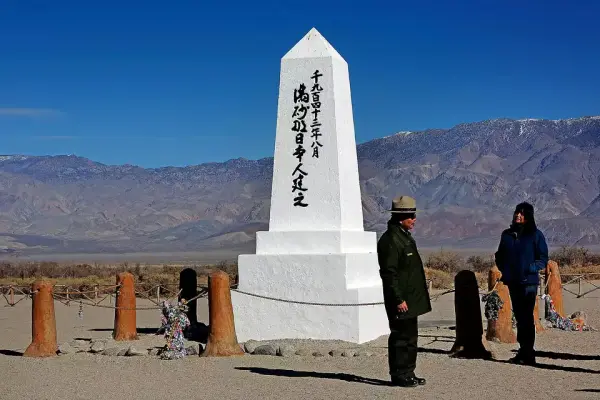
Manzanar is one of several federally protected sites that center the experiences of marginalized groups and reckon with episodes of state-sanctioned injustice. Others include Tule Lake National Monument and Port Chicago Naval Magazine. The implications stretch beyond historical sites. Even at places like Yosemite National Park, which debuted an exhibit in 2021 highlighting early Chinese American contributions to road construction, there’s concern that years of long-overdue progress could be undone.
“We’re just starting to unearth some of these important histories, and now we’re being faced with the attempt to erase them,” Arguelles said.
“It’s basically to chill any type of narrative that doesn’t match what this current administration wants to try to portray,” said Arguelles, who confirmed that park staff across California are already feeling the pressure. “Morale at parks is very low.”
Established under the 1916 Organic Act and reinforced by the 1966 National Historic Preservation Act, the National Park Service holds a legal mandate to preserve, protect and interpret American history.
“The park service for a century has worked to tell the story of America’s history and heritage, and does that very carefully and is very thoughtful in the way it portrays history,” Arguelles said. “Basically this is an attempt to kind of take that away from them … and force them to possibly implement a narrative that they don’t agree with or that simply doesn’t match the actual facts of history.”
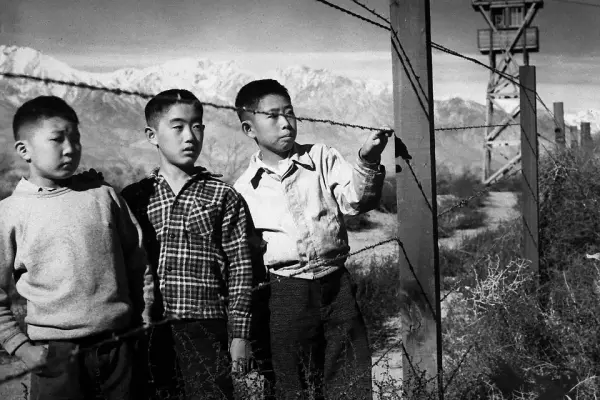
The executive order, titled “Restoring Truth and Sanity to American History,” along with follow-up memoranda issued by Interior Secretary Doug Burgum on May 20 and National Park Service Comptroller Jessica Bowron on June 9, instructs park service superintendents to identify and flag signs, exhibits, films and other public-facing content disparaging U.S. history. They are also required to report any monuments or markers removed since 2020, which could be reinstated if the removals are deemed to reflect “improper partisan ideology.” Findings are due by July 18.
Park units are also now required to post signs inviting public feedback through a QR code linked to a government form. The signs are meant to reinforce that federal land “belongs to the American people,” while also creating a means for visitors to report “negative” depictions of the U.S. that they believe violate the new policy.
Arguelles said some park officials were able to initially view a database of incoming comments, allowing them to monitor what visitors were flagging, but that access was later revoked. It’s unclear whether access was reinstated.
Nina Wallace, a spokesperson for Densho, a nonprofit dedicated to preserving the history of Japanese American incarceration, said that the directive is clearly part of a broader “disturbing” trend.
“It feels very much part of this larger pattern that we’re seeing of trying to erase these uncomfortable or ‘ugly’ histories,” Wallace told SFGATE, noting that documentation at parks of the history of slavery, Indigenous displacement, and the Chicano Huelga movement among others will likely face erasure if the Trump administration gets its way.
Wallace emphasized that the documentation of these histories is not speculative or disputed accounts.
“These histories are well documented at this point,” she said. “There are thousands of government documents, oral histories, photographs, letters … there’s so much material showing that, no, this really happened.”
She added: “To kind of call that into question now, or to suggest that it’s up for debate, is incredibly concerning.”
Wallace also lambasted the Trump administration’s framing of the policy around “sanity” and “truth,” calling it troubling, especially in regards to perpetuating misinformation about underrepresented communities.
“We have the truth. We know the truth,” Wallace said. “The problem is just that, for a very long time, the people who lived that truth were not listened to, not given a platform.”
Wallace warned that efforts to silence those narratives send a chilling message. “When you’re erasing communities’ histories, that is, in a way, an attempt to erase those communities themselves,” she said. “It sends a pretty clear message that your story is not welcome here — and by extension, you are not welcome here.”
by Olivia Hebert, SFGate.
Comments

Powered by RoundtableAn AI/DeFi-powered Enterprise Media Operating System. Learn more at Roundtable.io.© Roundtable 2026. By using this site you agree to the Terms of Use and Privacy Policy